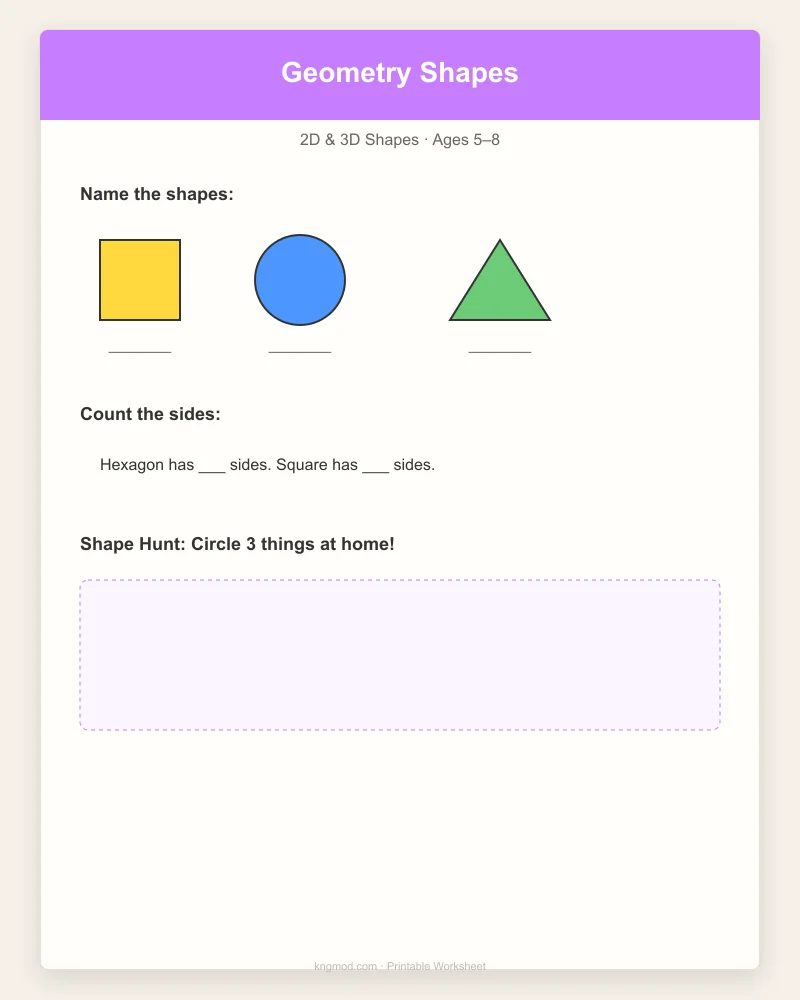
Geometry Shapes Fun — Identify, Draw & Count Sides
$2.59
- 10 printable worksheet pages
- Identify and count sides
- 2D shapes with real-world links
- Drawing and sorting activities
Purchase details
- Pages: 10 printable worksheet pages matched to this product
- Format: Instant PDF download after successful payment
- Printing: Print at home as many times as you need for your household or classroom
- Delivery: Instant download page after Paddle checkout (plus receipt email)
- Refunds: Digital download — non-refundable once purchased
- License: Personal and classroom use only (no resale or redistribution)
🔒 Secure Paddle checkout · 📄 10-page PDF · ❌ Non-refundable digital item
Description
Start with the room, not the worksheet. Can your child find a rectangle, a circle, and something with a face that is not a person? Then open this 10-page geometry pack and put names to what they have noticed.
Made for ages 5–8, the activities cover familiar 2D figures such as circles, triangles, squares, rectangles, pentagons, and hexagons, along with introductory 3D shapes. Children trace outlines, identify figures in everyday objects, count sides and vertices, and sort shapes by their properties. The vocabulary grows with the work: edge, vertex, face, and angle appear in context instead of sitting in a list to memorise.
Shape hunts and pattern-block tasks give active learners a reason to look beyond the page. Symmetry drawing asks for a different sort of care, while the 3D net exploration can produce a useful surprise—the flat arrangement does not look much like the solid until the faces are mentally folded together. That is the idiosyncratic bit I would linger over, even if it takes longer than the matching exercises.
Extension pages introduce congruence and simple transformations for children ready for them. You can leave those aside while the basics settle. Print the pack for a classroom geometry unit, use individual sheets at home, or pair a page with a real-world shape search. A pencil and ruler help, but curious eyes do most of the work.
You Might Also Like
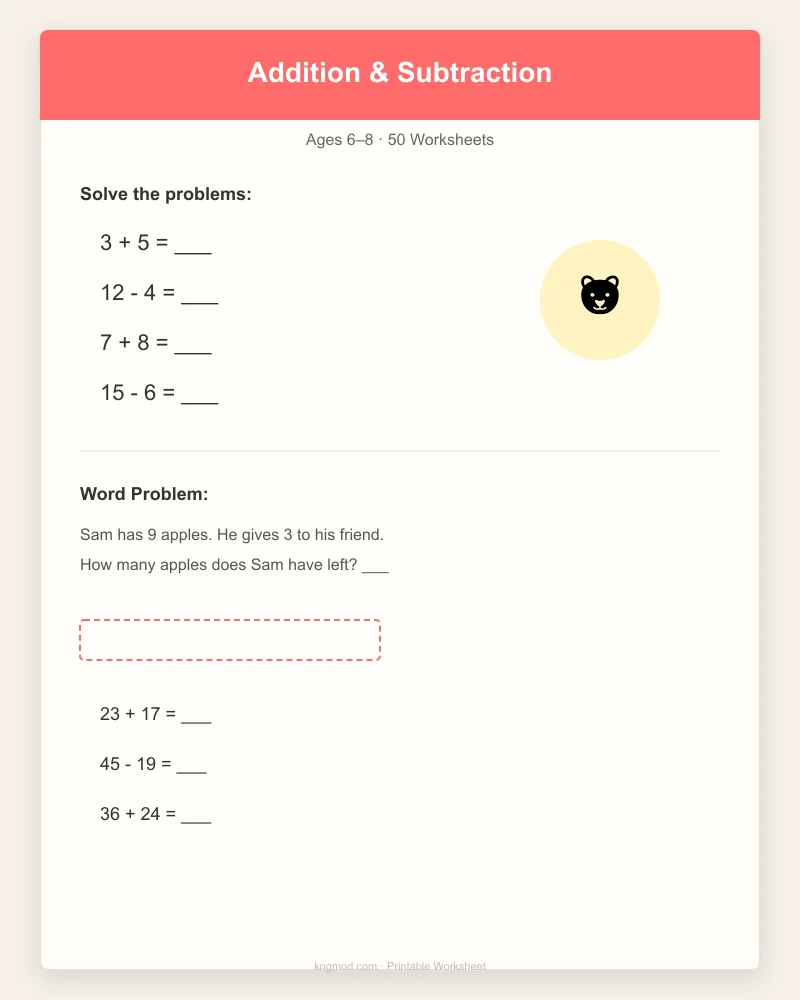
Addition & Subtraction Fun Pack — 10 Printable Pages
10 printable pages
$2.99
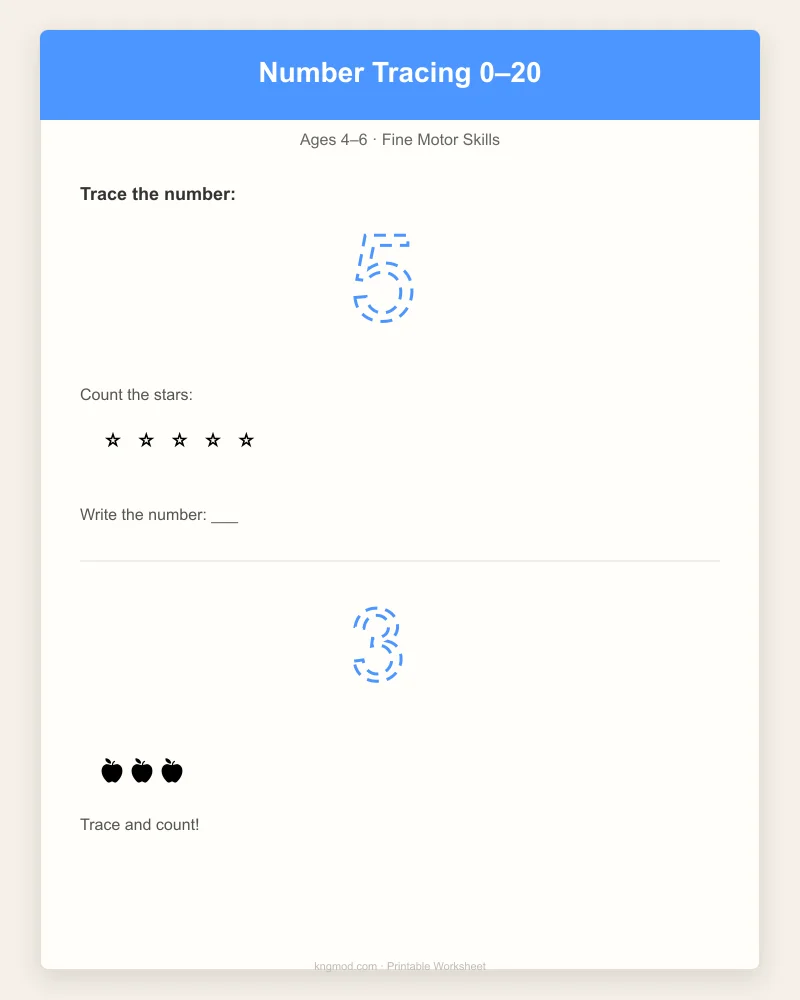
Number Tracing Adventure — Learn to Write 0–20
10 printable pages
$1.99
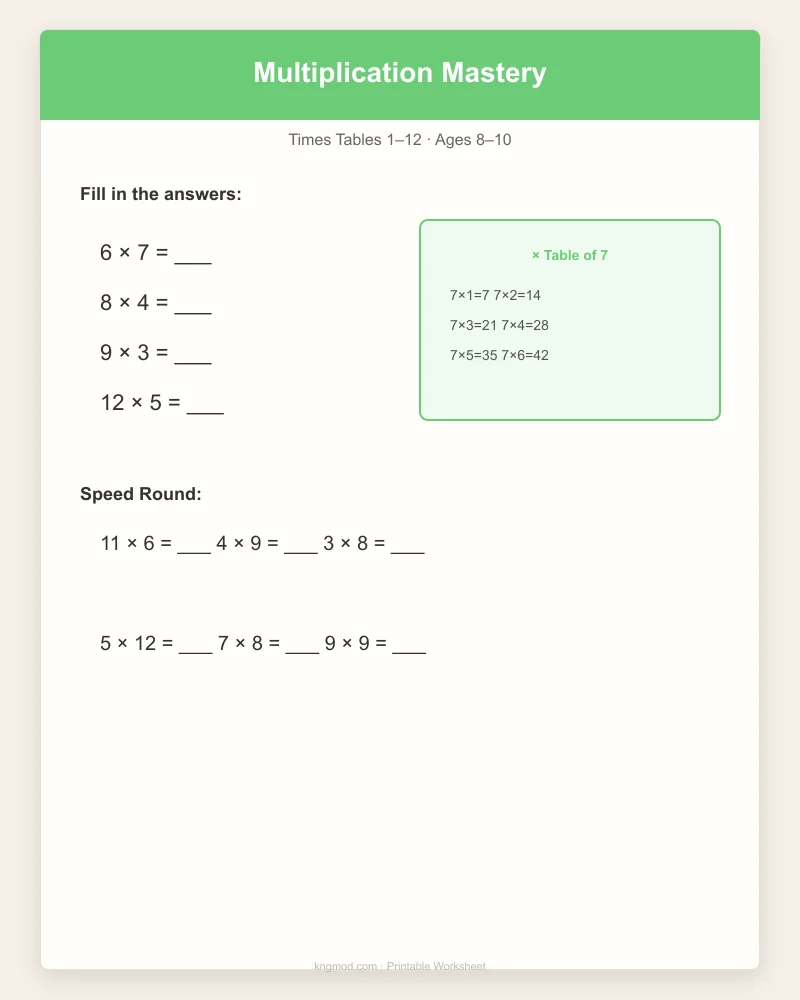
Multiplication Mastery Sheets — Times Tables 1–12
10 printable pages
$3.49
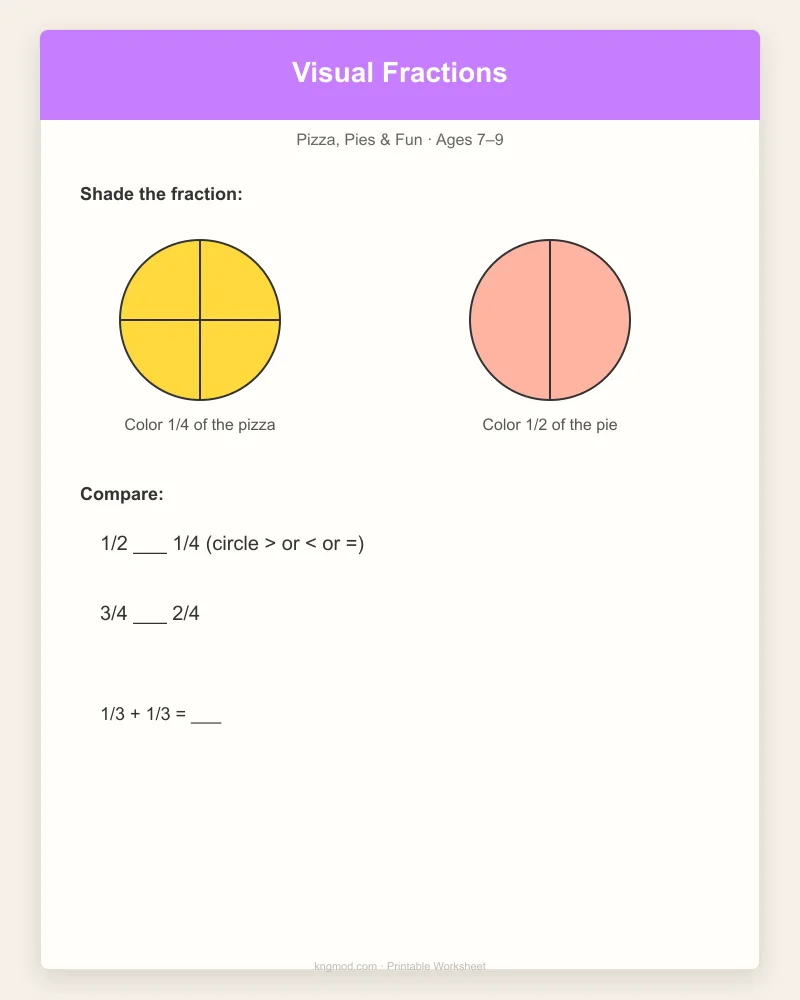
Visual Fraction Explorer — Pizza, Pies & Fun Fractions
10 printable pages
$2.49