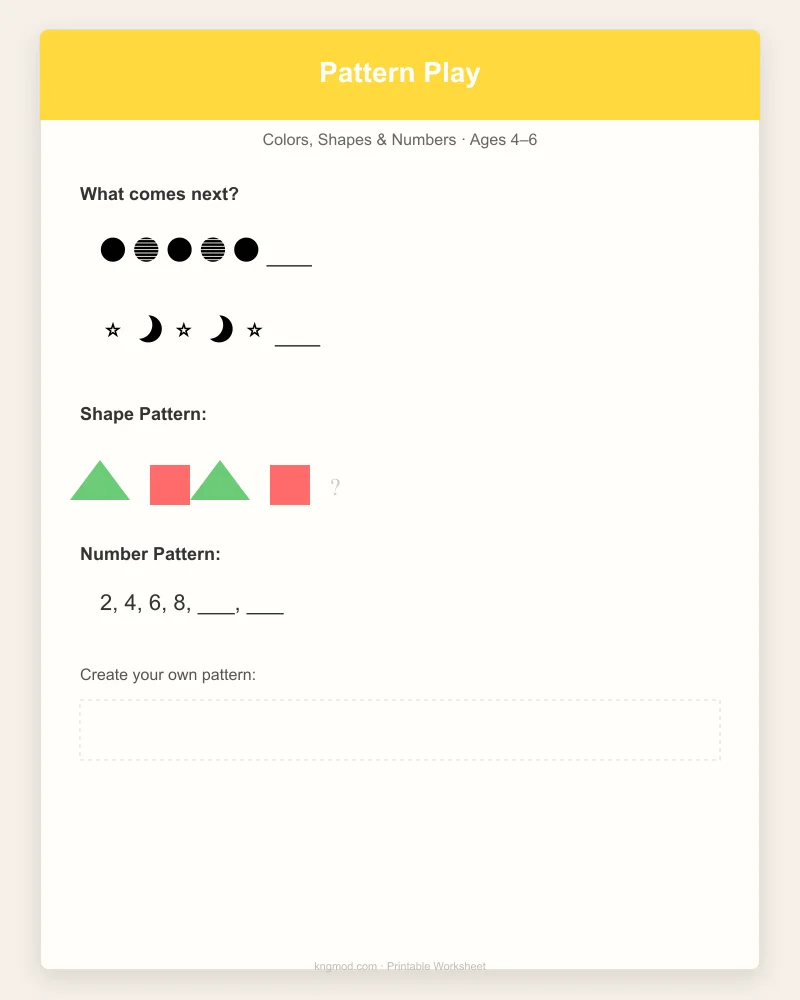
Pattern Recognition Play — Colors, Shapes & Numbers
$2.09
- 10 printable worksheet pages
- Color, shape, and number patterns
- Finish, explain, and invent sequences
- Preschool-friendly layouts
Purchase details
- Pages: 10 printable worksheet pages matched to this product
- Format: Instant PDF download after successful payment
- Printing: Print at home as many times as you need for your household or classroom
- Delivery: Instant download page after Paddle checkout (plus receipt email)
- Refunds: Digital download — non-refundable once purchased
- License: Personal and classroom use only (no resale or redistribution)
🔒 Secure Paddle checkout · 📄 10-page PDF · ❌ Non-refundable digital item
Description
Red bead, blue bead, red bead… most four-year-olds can tell you what comes next before they can explain the rule. These 10 pages take that instinct and give it language.
Children ages 4–6 work with colours, shapes, numbers, and everyday objects. Early AB sequences lead into more involved arrangements and growing number patterns. On some pages they circle the next item; on others they finish a strip, identify the rule, or make a pattern of their own. The pictures are large and clear, leaving young learners space to scan the row without losing their place.
The themes change from bead necklaces and train cars to flower gardens and sticker rows. I have a soft spot for the train-car patterns because the fixed left-to-right order makes it obvious when one “car” has gone missing. If an answer is guessed, cover the final choices and ask the child to say the pattern aloud twice. Hearing the repeat often does more than another explanation.
Create-your-own sections are included alongside the recognition work. They are a useful check: extending somebody else’s rule is one skill, but inventing a sequence that truly repeats is another. Use the sheets in a preschool centre, for kindergarten morning work, or at the kitchen table with crayons nearby. The gradual rise in difficulty means you can stop at a comfortable point and print the later activities when the simpler patterns feel automatic.
You Might Also Like
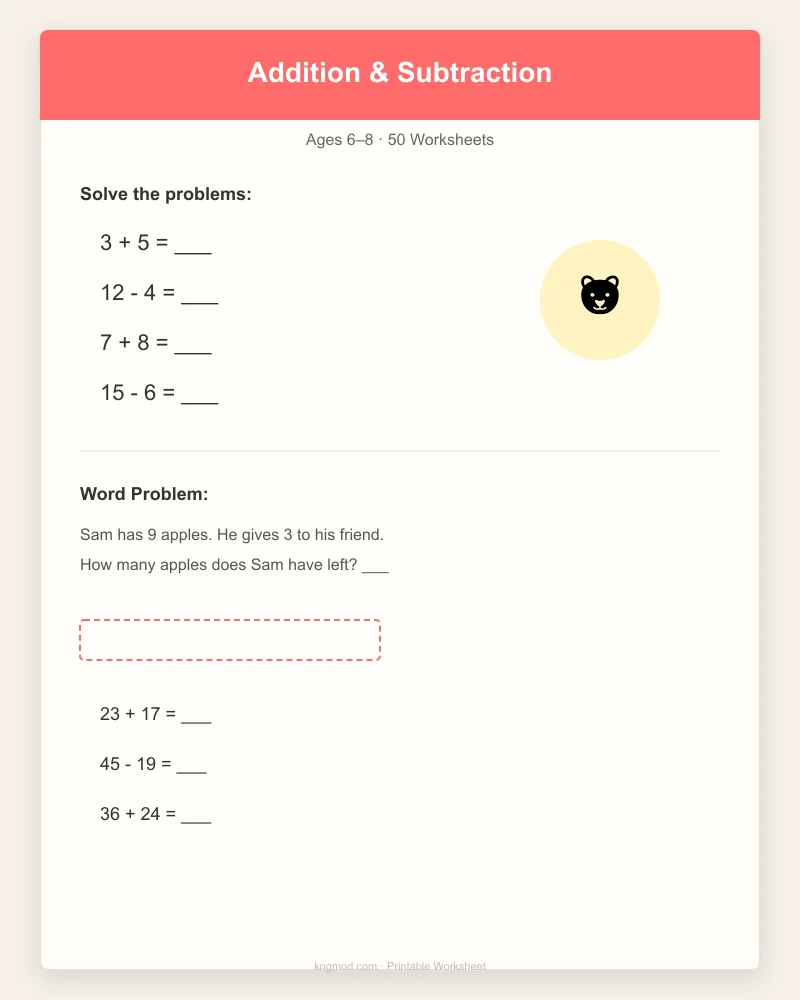
Addition & Subtraction Fun Pack — 10 Printable Pages
10 printable pages
$2.99
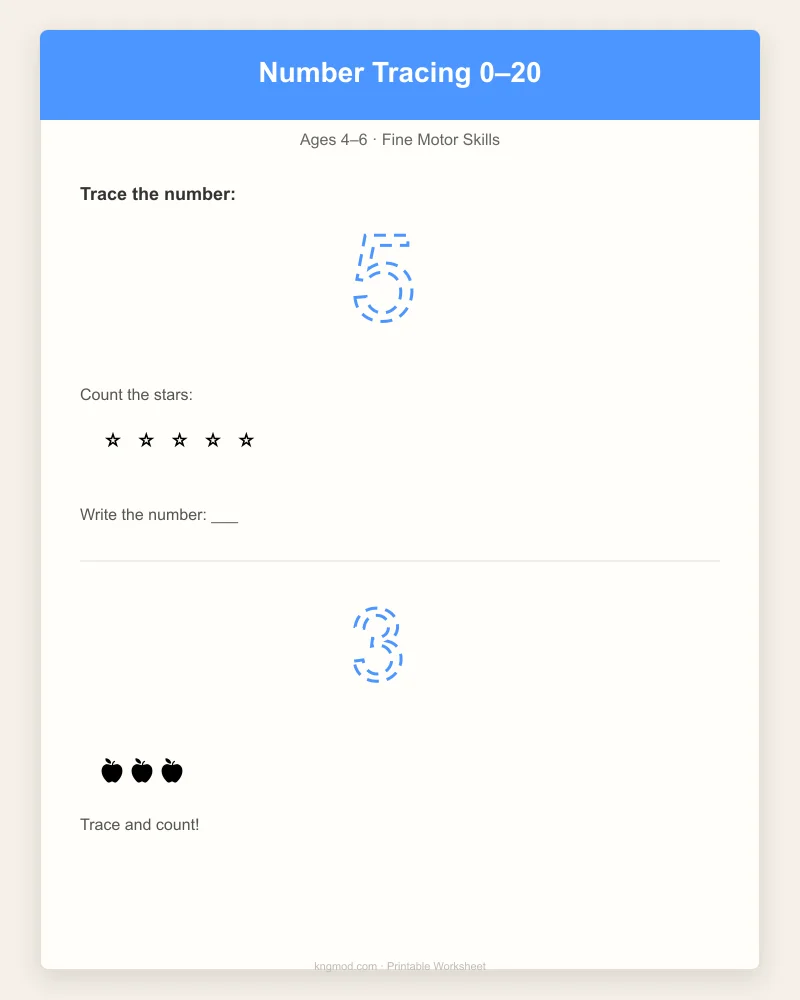
Number Tracing Adventure — Learn to Write 0–20
10 printable pages
$1.99
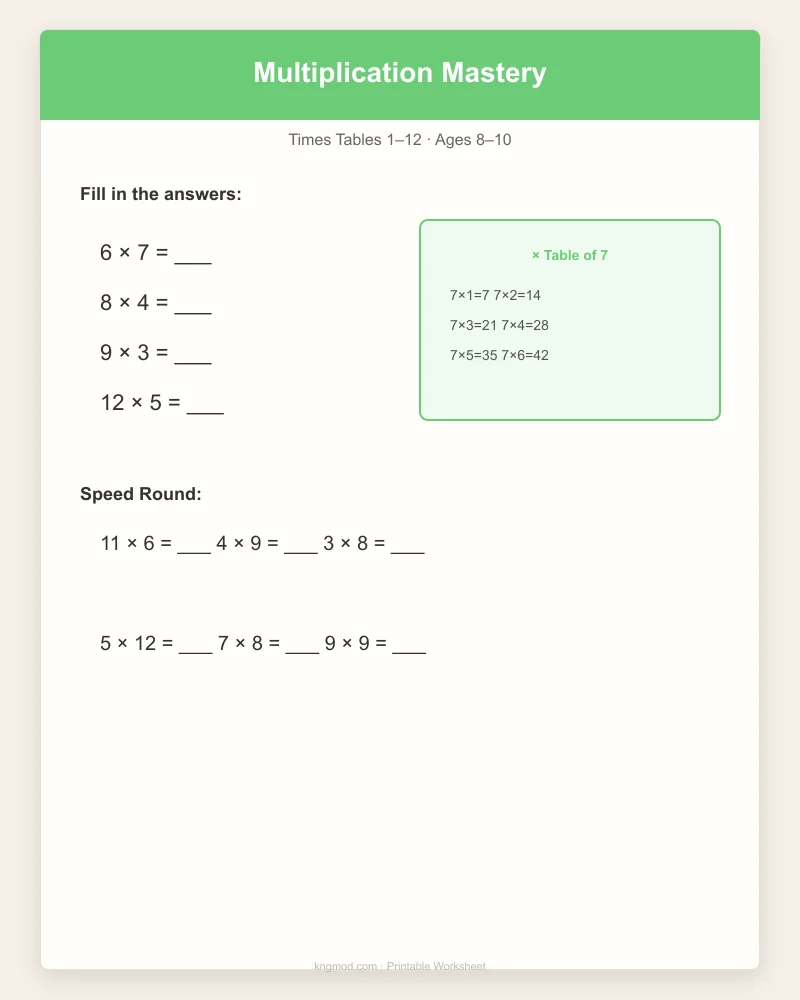
Multiplication Mastery Sheets — Times Tables 1–12
10 printable pages
$3.49
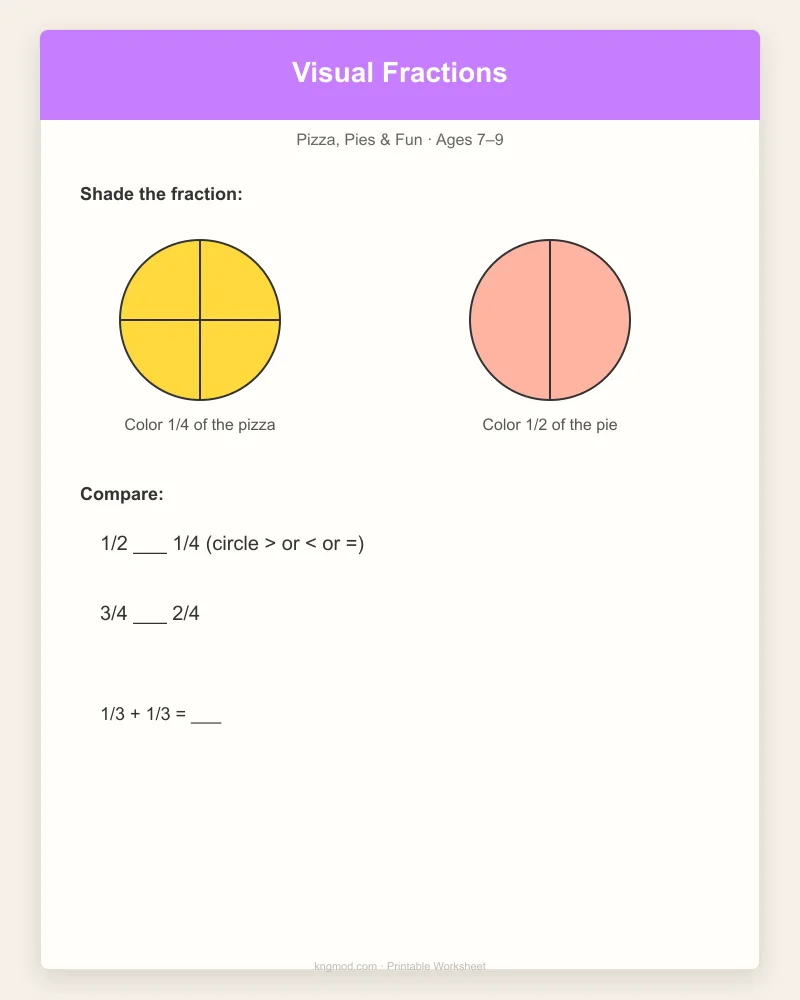
Visual Fraction Explorer — Pizza, Pies & Fun Fractions
10 printable pages
$2.49